

Every generation of parents has been told that teenagers are anxious, moody, and dramatic, and that most of it passes. That advice is not wrong. Adolescence genuinely does produce more worry than childhood did, for reasons that are structural rather than pathological, and the majority of nervous teenagers do not have a disorder.
The difficulty is that anxiety disorders are also the most common mental health conditions in adolescence, and they look enough like ordinary teenage worry that families routinely wait years before getting help. Data from the National Comorbidity Survey Adolescent Supplement found that roughly 32 percent of 13- to 18-year-olds meet criteria for an anxiety disorder at some point, with around 8 percent experiencing severe impairment. Only about half receive any treatment, and the median age of onset is near 11, so most cases begin before parents start asking the question.
So the question worth answering is not whether your teenager is anxious. Almost certainly he is, at least sometimes. It is whether what you are seeing has crossed a threshold that is reasonably well defined and that you can actually assess. This article walks through that threshold, how anxiety presents in adolescent boys specifically, what makes it worse, and what treatment genuinely works. For families where anxiety has already collapsed school attendance or triggered substance use, a residential treatment center for teens in Utah combines clinical care with academics in one setting.
Why Adolescence Produces Anxiety by Design

Understanding the baseline makes the abnormal easier to see.
The Developmental Mismatch
Brain maturation is uneven during the teenage years. The limbic system, including the amygdala, which detects and responds to threat, reaches functional maturity relatively early. The prefrontal cortex, which evaluates whether a threat is real, puts it in context, and regulates the response, continues developing into the mid-twenties.
The practical result is a period of years in which the alarm system is fully online, and the system that decides whether the alarm is warranted is still being built. Threat responses fire quickly and take longer to switch off. This is not a flaw in a particular teenager. It is the standard architecture of adolescence.
Layered on top of that, social evaluation becomes intensely salient. The opinions of peers acquire a weight they never had in childhood and will not have again in adulthood. That shift is developmentally appropriate, since adolescence is when a person builds an identity outside the family, but it means the ordinary conditions of teenage life, including being observed, judged, and compared, land on a nervous system already primed.
Some Anxiety Is Supposed to Be There
Anxiety is a functional signal. It focuses attention on genuine threats, motivates preparation, and calibrates social behavior. A teenager who feels nothing before a college interview or a championship game is not healthier than one who feels nervous.
More importantly, tolerating manageable anxiety is how the capacity to handle it gets built. Every time a teen feels afraid, moves forward anyway, and discovers he survived, he gains evidence that fear is survivable. Removing all sources of anxiety from an adolescent’s life does not produce a calm adult. It produces an adult who never gathered that evidence. Our overview of stress versus distress in adolescents draws this distinction in more detail.
The goal, then, is not a teenager who never feels anxious. It is a teenager whose anxiety stays proportionate, temporary, and non-limiting.
Is My Teen Anxious, or Is This Normal?

Clinicians do not distinguish normal from disordered anxiety by measuring how bad it feels. They assess a handful of specific dimensions, and parents can assess most of them too.
The Dimensions That Define the Threshold
- Proportion. Is the response scaled to the actual situation? Nervousness before a major exam is proportionate. Vomiting before a routine quiz is not.
- Duration. Is it tied to a stressor that will pass, or has it become the background state? Generalized anxiety disorder requires roughly six months of persistent worry. A rough month during a breakup differs from eighteen months of steady dread.
- Breadth. Is the worry attached to one thing or has it spread? Anxiety that migrates from grades to friendships to health to the future, always finding a new subject, behaves differently from a single specific fear.
- Impairment. Is it costing him things? School performance, friendships, sleep, activities he used to value, family relationships, and physical health are the domains to check. Impairment is the single most important criterion in nearly every diagnostic framework.
- Avoidance. Is he restricting his life to prevent the feeling? More on this below, because it is the most useful marker available to a parent.
- Controllability. Can he be reasoned or reassured out of it in a way that lasts? Ordinary worry responds to information and perspective. Clinical anxiety does not, or the relief evaporates within hours and the same question returns.
| Dimension | Developmentally Typical Worry | Clinical Anxiety |
| Proportion | Roughly matches the situation | Severe response to minor or unlikely threats |
| Duration | Days to a few weeks, tied to an event | Months, persisting after the stressor resolves |
| Focus | Attached to something specific | Migrates across topics, always finds a target |
| Physical symptoms | Occasional butterflies, brief tension | Recurrent stomachaches, headaches, chest tightness, insomnia |
| Function | Still attends, performs, socializes | School, friendships, sleep, or activities are declining |
| Avoidance | Approaches the feared thing despite nerves | Actively arranges life to avoid it |
| Reassurance | Helps, and the relief holds | Helps briefly, then the same worry returns |
| Recovery | Settles once the event passes | Rarely fully settles; new worries replace old ones |
No single row is diagnostic. A pattern across five or six, sustained over months, warrants a professional evaluation.
Why Avoidance Is the Most Useful Single Marker
If you track one thing, track avoidance, for two reasons.
First, it is observable. You do not need access to your teenager’s internal experience to notice that he has stopped raising his hand, stopped going to parties, dropped a class, or started finding reasons to miss school on presentation days.
Second, and more importantly, avoidance is not just a symptom. It is the engine that keeps anxiety running. When a teen avoids something frightening, the fear drops immediately, and that relief is powerfully rewarding. His brain records that avoidance worked. The next time the situation arises, the pull to avoid is stronger, and the belief that he could not have handled it goes untested.
This is why anxiety tends to expand rather than resolve on its own, and it is why the most well-meaning parental responses often make things worse. Every accommodation that spares a teen a frightening situation delivers short-term relief and long-term reinforcement.
Teen Anxiety Symptoms
Anxiety is often described as a feeling, but adolescents frequently experience and report it as physical illness.
Physical Symptoms Usually Come First
Many teenagers with anxiety disorders reach a pediatrician’s office before a therapist’s, with complaints that produce no findings on examination. Watch for:
- Recurrent stomachaches, nausea, or bowel changes, often worst on school mornings
- Frequent headaches without another explanation
- Chest tightness, a racing heart, or shortness of breath
- Muscle tension, jaw clenching, teeth grinding, or persistent neck and shoulder pain
- Fatigue that sleep does not resolve
- Dizziness, lightheadedness, or a feeling of unreality
- Sweating, trembling, or cold hands
- Frequent visits to the school nurse, especially clustered around certain classes or days
- Difficulty falling asleep, with a mind that will not stop at night
The school-morning pattern deserves particular attention. Symptoms that are severe at 7 am, resolve by mid-morning once staying home is settled, and reappear the next school day are following anxiety’s signature rather than an infection’s.
The Emotional and Cognitive Picture
Alongside the physical, look for worry the teen struggles to control, catastrophic thinking, perfectionism and intolerance of mistakes, difficulty concentrating, indecisiveness, repeated requests for reassurance about the same concern, restlessness, and persistent dread without an identifiable cause.
Irritability belongs on this list too, and it is the most commonly missed item. In adolescents, particularly boys, anxiety very often presents as a short fuse rather than as expressed worry.
How Anxiety Looks Different in Boys
Girls are diagnosed with anxiety disorders at roughly twice the rate of boys. Some of that gap is real. A meaningful portion of it is a detection problem, because the diagnostic picture most adults carry is built around how anxiety typically presents in girls.
An anxious adolescent boy frequently does not say he is worried. He may not have the vocabulary for it, may consider the admission unacceptable, or may not recognize the feeling as anxiety at all. What comes out instead:
Anger and irritability. Snapping, slammed doors, hostility over small requests. Anxiety and anger share physiological machinery, and for many boys anger is the more permissible expression. Our article on why your son may be so angry explores what sits underneath adolescent male anger.
Defiance and refusal. Homework not done, activities quit. This reads as laziness. Frequently it is avoidance of a task that feels threatening, and a boy will choose being seen as someone who did not try over someone who tried and failed.
Apparent indifference. The phrase “I don’t care” is one of the most reliably misread statements in adolescence. It very often means the opposite, functioning as protective cover for caring intensely about an outcome he expects to fail at.
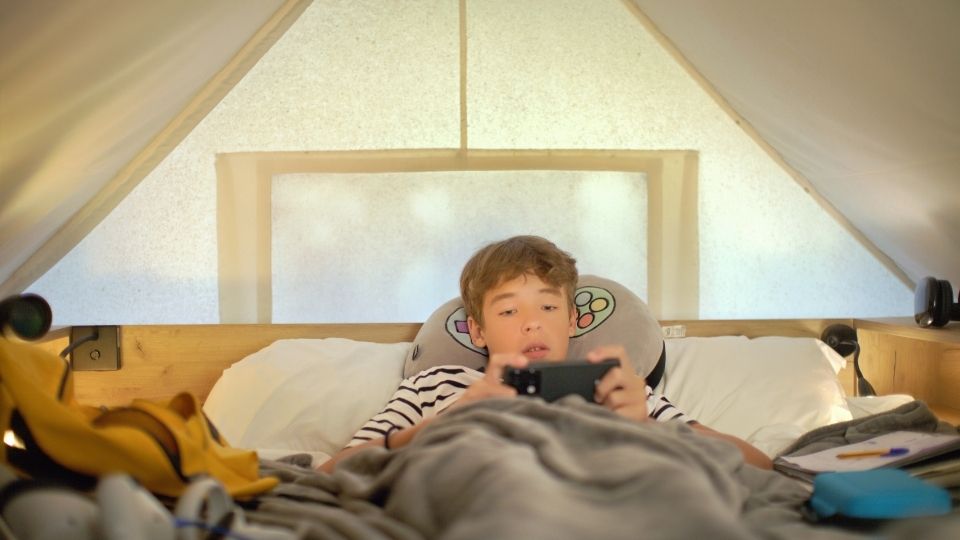
Withdrawal into screens. Gaming and scrolling offer a predictable environment with controllable stakes and no social evaluation, so escalating retreat into them is often anxiety management rather than preference.
Physical complaints and substance use. Both address a feeling without naming it.
Perfectionism and overcontrol. Some anxious boys look like the opposite of a problem, achieving relentlessly, and the cost only shows when a single setback produces disproportionate collapse.
The practical implication is significant. An anxious boy is considerably more likely than an anxious girl to be met with a disciplinary response rather than a clinical one, and to receive consequences for behavior that is driven by fear.
The Anxiety Disorders Most Common in Adolescence
These are clinical diagnoses that require a professional, but knowing the shapes helps.
Generalized Anxiety Disorder
Persistent, difficult-to-control worry across multiple domains for at least six months, with physical symptoms such as restlessness, fatigue, concentration problems, irritability, muscle tension, and disturbed sleep. The characteristic feature is that the subject changes while the worry itself stays constant.
Social Anxiety Disorder
Marked fear of situations involving possible scrutiny or humiliation. Adolescence is its most common period of onset. It is routinely mistaken for shyness or introversion, but the distinguishing feature is impairment: a socially anxious teen wants connection and is prevented from it, and will avoid presentations, calling attention to himself, eating in front of others, or speaking to unfamiliar people.
Panic Disorder
Recurrent panic attacks, meaning abrupt surges of intense fear with racing heart, chest pain, shortness of breath, trembling, and a sense of impending doom, plus persistent worry about further attacks. Attacks often lead to emergency visits for suspected cardiac problems. A teen may then avoid wherever the attack happened, which is how panic disorder expands into agoraphobia.
School Refusal Is a Symptom, Not a Diagnosis
Difficulty attending school is one of the most common ways adolescent anxiety becomes visible, and it is frequently handled as a discipline issue. Escalating consequences alone rarely resolve it, because the behavior is maintained by the relief avoidance provides rather than by insufficient motivation.
The pattern starts small: one missed day, then Mondays, then a class, then chronic absence. Each successful avoidance makes returning harder, and within weeks the anxiety attaches to the return itself as much as to the original trigger. Early, graduated re-entry works far better than either forcing a full return or waiting for readiness. Our guide on what to do if your teen refuses to go to school covers how to structure that.
What Makes It Worse
Sleep
The relationship runs both ways, and it is powerful. Anxiety delays sleep onset, and insufficient sleep amplifies amygdala reactivity while degrading prefrontal regulation, producing a nervous system that is measurably more threat-sensitive the following day. Adolescents also experience a natural shift toward later sleep timing, which collides with early school start times.
Sleep is the highest-yield intervention available to most families, and it is often the one skipped in favor of talking about feelings.
Screens and Social Media
The evidence here is contested and worth representing honestly. Associations between heavy social media use and adolescent anxiety are consistently found but typically modest, and researchers disagree substantially about causation.
Less controversial is the mechanism of displacement. Late-night use costs sleep, passive scrolling replaces in-person interaction, and continuous curated comparison operates on the exact social evaluation sensitivity adolescence already heightens. Those are worth addressing regardless of where the broader debate lands.
Substance Use as Self-Medication
Anxiety usually arrives before substance use, not after. Alcohol, cannabis, and nicotine all provide fast, reliable, short-term relief, which makes them extremely effective at maintaining the underlying problem.
The trap is mechanical rather than moral. Each use relieves anxiety in the moment, tends to raise baseline anxiety between uses, and replaces the practice through which distress tolerance would otherwise develop. A teen who has managed every uncomfortable feeling chemically for two years has not built the skills his peers were building. Our overview of teen anxiety and substance abuse covers how the two reinforce each other.
When to Seek Professional Help
Get an evaluation rather than waiting if you see:
- School attendance declining, or refusal to attend
- Panic attacks, or emergency visits with no medical cause found
- Withdrawal from friendships and activities he previously valued
- Persistent sleep problems lasting more than a few weeks
- Recurrent physical complaints that examinations do not explain
- Any self-harm, or statements about not wanting to be here, which warrant immediate attention; the 988 Suicide and Crisis Lifeline is available at any hour by call or text
- Alcohol, cannabis, or other substance use appearing alongside the anxiety
- Functional decline across two or more domains sustained over a month or more
- Family life reorganizing around managing his anxiety
You do not need certainty to seek an assessment. An evaluation that finds nothing clinical costs one appointment. Waiting eighteen months costs far more.
What Actually Works
Anxiety is among the most treatable conditions in adolescent psychiatry, which is the part families most need to hear.
CBT and Exposure
Cognitive behavioral therapy is first-line and has the strongest evidence base. For anxiety specifically, the active ingredient is exposure: planned, graduated, repeated approach to feared situations while the anxiety is allowed to rise and then fall on its own.
This is counterintuitive enough that families sometimes resist it. It works because avoidance is what maintains anxiety, so the treatment has to reverse the avoidance rather than manage around it. Exposure is not flooding or forcing. It is a collaborative hierarchy built with the teen, starting well within tolerance and progressing as each step becomes manageable. Our overview of cognitive behavioral therapy explains the approach further.
Medication
SSRIs have good evidence in adolescent anxiety. The landmark Child and Adolescent Anxiety Multimodal Study, published in the New England Journal of Medicine in 2008, compared four conditions and found that combined CBT plus sertraline produced much or very much improvement in roughly 81 percent of participants, versus about 60 percent for CBT alone, 55 percent for medication alone, and 24 percent for placebo.
Two things follow. Combined treatment outperformed either component, so medication is worth discussing rather than treating as a last resort. And CBT alone helped a majority, so it is a legitimate starting point for families who prefer to begin there.
Antidepressants carry an FDA boxed warning regarding suicidal thinking in young people, which means monitoring during the initial weeks is essential. It is also true that untreated anxiety and depression carry their own substantial risks. This is a conversation for a prescribing clinician who knows the specific teenager, not a decision to make from an article.
The Parent’s Role Is Bigger Than It Looks
One of the more useful developments in this field is the finding that changing parental responses reduces child anxiety, sometimes even when the child is not in therapy. Work on parent-based treatment, including the SPACE program developed at Yale, targets family accommodation directly.
The formula is deceptively simple: validation paired with confidence. Validation means acknowledging the feeling as real rather than arguing with it. Confidence means communicating belief that he can handle the situation anyway. Most parents do one or the other. Anxiety responds to both together.
What that sounds like in practice is closer to “I know that feels awful, and I know you can do it” than to either “there’s nothing to worry about” or “okay, you can stay home.”
What Backfires
These responses are well-intentioned, and they reliably make anxiety worse.
- Repeated reassurance. Answering the same worry question for the fifth time provides relief that lasts minutes and teaches that the question needs asking. The alternative is answering once, then declining further rounds warmly and confidently.
- Accommodation. Calling him in sick, ordering for him, speaking to teachers on his behalf, driving him instead of letting him take the bus, or removing the feared task. Each instance buys calm today and enlarges the problem.
- Minimizing. “You’re fine,” “everyone gets nervous.” Often factually reasonable, and heard as an instruction to stop reporting.
- Over-identifying. “I was exactly the same, it’s just how our family is.” Meant as solidarity, it communicates that this is fixed and untreatable.
- Reacting to the irritability rather than what drives it. Meeting an anxious boy’s hostility with escalating conflict guarantees that whatever sits underneath never gets discussed.
When Outpatient Is Not Enough
Most adolescent anxiety responds well to weekly therapy, family adjustments, and sometimes medication. Some situations need more.
Consider a higher level of care when school attendance has collapsed and re-entry attempts have repeatedly failed, when several courses of outpatient treatment have not produced change, when substance use has developed alongside the anxiety, when there has been self-harm, when academic damage has progressed past what tutoring can address, or when the household has organized so completely around accommodation that the pattern cannot realistically shift while everyone remains in it.
At White River Academy, boys receive clinical treatment for anxiety alongside accredited academics, physical activity, and daily relational practice, in an environment where avoidance is not available and progress happens continuously rather than in weekly one-hour increments. For a teen whose anxiety has cost him school, friendships, and confidence, rebuilding those concurrently tends to work better than addressing them one at a time.
Is My Teen Anxious? Frequently Asked Questions
How can I tell if my teen is anxious or just being a teenager?
Look at impairment and avoidance rather than intensity. Typical worry is proportionate, temporary, and does not stop a teen from attending, performing, or socializing. Clinical anxiety persists for months, spreads across topics, and visibly shrinks his life. Sustained decline across several areas warrants evaluation.
Will my teenager grow out of anxiety on its own?
Some do, but anxiety disorders more often persist or worsen without treatment, partly because avoidance reinforces itself over time. Untreated adolescent anxiety also raises risk for depression and substance use. Because treatment works well, waiting generally costs more than an assessment would.
Is medication necessary for teen anxiety?
Not always. Cognitive behavioral therapy alone helps a majority of adolescents and is a reasonable starting point. Research shows combined therapy and medication produces the highest response rates, so medication is worth discussing with a prescriber, particularly when symptoms are severe or therapy alone stalls.